Why do Storage Tanks Need to be Insulated?
How Perlite Can Help
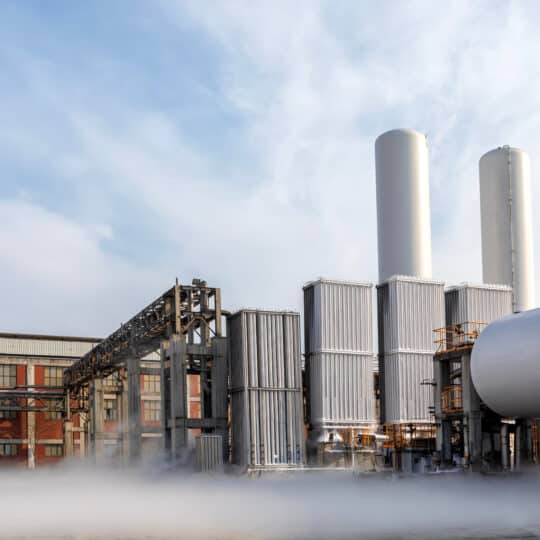
No matter what you’re storing, the receptacle used needs to create an environment where the contents won’t be altered or disturbed. This is especially important when storing elements that require a stable temperature—whether hot or cold. Proper insulation is critical in these cases. This is one of the reasons why a storage tank needs insulation, but the type of insulator is also paramount. This is where perlite comes in.
Why a Storage Tank Needs Insulation
Not only does insulating storage tanks help create a stable temperature for maintaining the safety and integrity of contained products, but
it also impacts other areas of your business and the environment, including:
- Improving energy efficiency
- Reducing operating costs by minimizing heat loss or gain
- Protecting against freezing or overheating
- Helping with regulatory compliance
- Reducing the risk of corrosion, condensation, and equipment failure
Keeping the stored contents at a consistent temperature helps to prevent altering the material—from melting or solidifying to degrading or other changes to the product’s quality. The contents should be safe from freezing in cold weather or overheating when it’s hot, no matter where the storage facility is located.
Proper insulation also reduces the amount of energy needed to heat or cool the storage tank. This means lower energy consumption and operating costs, which is better for your bottom line and the environment. Other benefits for you and the ecosystem include:
- Protecting workers from burns by minimizing the surface temperature of hot or cold tanks.
- Preventing condensation, which can lead to corrosion and leaks of potentially hazardous materials.
- Reducing energy waste and greenhouse gas emissions.
- Helping to comply with industry regulations for specific temperature controls.
- Extending equipment lifespan by protecting it from extreme temperature fluctuations and corrosion.
When it comes to the type of insulation, the materials matter. Whatever is used as a insulator needs to be able to withstand extreme temperatures, not degrade or impact contents, and be safe to use. Perlite checks these boxes.
Using Perlite for Storage Tank Insulation
Perlite is a natural mineral with a wide range of features that makes it an excellent insulator:
- Lightweight
- Fire-resistant
- Low thermal conductivity
Perlite’s lightweight, porous properties can be easily installed as a loose-fill insulation in storage tanks either by being blown into cavities or tight spaces between double-walled tanks. It flows in to fill the crevices that may be hard to reach for other types of insulation. Its low density not only makes it easy to use, but also puts less stress on the tank structure.
Perlite is non-combustible, which adds a layer of fire safety to the storage facility. This not only helps to meet certain regulations, but would also be appreciated by all who work there. Perlite’s inert makeup also won’t rot, settle, or attract pests.
Mineral-based perlite is so versatile that it can withstand both extremely high and low temperatures without degrading. This makes it ideal for cryogenic storage of liquids and for use around high-heat industrial applications. Plus, expanded perlite’s low thermal conductivity makes it effective at preventing heat from entering or exiting the storage tank.
With so many benefits, it’s worth looking into how perlite can help increase the effectiveness of your storage tank. Contact Chemrock to discuss your cryogenic needs.